THE ANCHOR’S RADIUS - a short story
PROLOGUE: THE ECHO
Narrator: [Unknown / The Residue]
The blood is the hardest thing to forget.
It tasted like copper and old batteries. It sprayed across the white marble steps in a fan—a violent, beautiful arc of red. I can still see the steam rising from it. I can count the droplets.
But you cannot.
If you were to walk past the steps of the Spire right now, you would see pristine stone. You would see a man named Silas sweeping dust, humming a tune, his chest rising and falling with the comfortable rhythm of the living. You would see the sunlight hitting a tower of white quartz.
You are wrong.
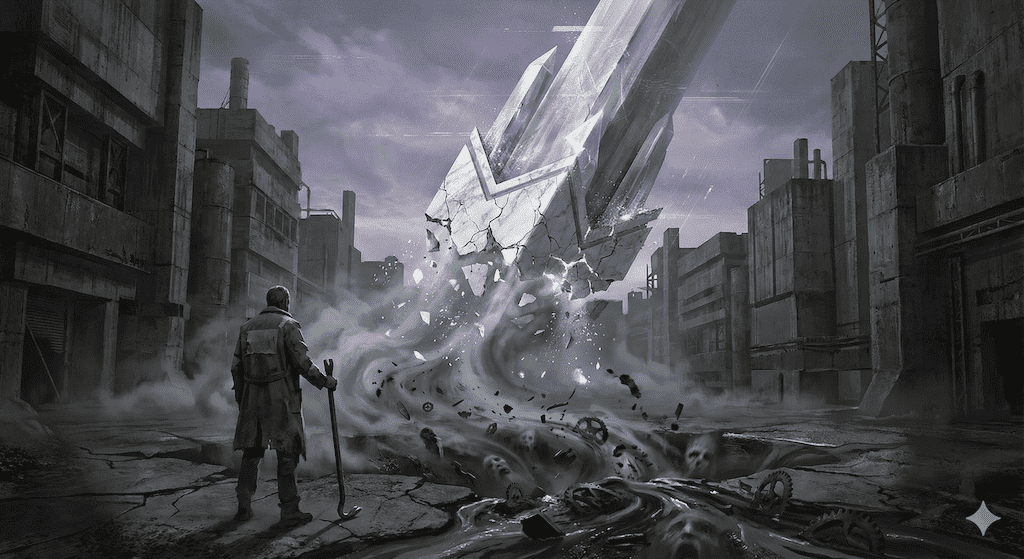
Forty minutes ago, the tower was not white quartz. It was jagged red glass. It was a weeping wound in the sky, pulled from the ether by a whim. And Silas was not sweeping. He was screaming. The glass had shifted—a groan of settling physics—and a shard the size of a door had sheared off.
I heard the snap of his spine. I felt the weight of the glass crushing the breath out of the world. It was a fact. It was true.
Then, the dreamer woke up. He didn’t like the red. He didn’t like the mess.
So he blinked.
The world stuttered. The red glass retracted into the air like smoke sucked back into a chimney. The blood lifted from the stones and un-spilled. The bone knit itself back together. The scream was shoved back down Silas’s throat.
The timeline healed over like water closing over a stone.
Silas is alive. The tower is white. The Tuesday sun is polite and warm.
But I am full of ghosts. I am the place where the red tower still stands. I am the silence that holds the scream. The world forgets its mistakes, but I am the trash bin where the errors are kept, and I am getting very, very heavy.
CHAPTER 1: THE BLINK
Narrator: Kael
Don’t blink.
The thought was a mantra, a drumbeat in my skull. Don’t blink. Don’t blink. Don’t let it drift.
The room smelled of ozone and violets. In the center of the chamber, on a velvet divan, the Master slept. His chest moved in a slow, deep rhythm. He looked peaceful. He looked like a man. But the air around him was sweating.
I stood in the corner, my boots magnetically locked to the floor, my hands clasped behind my back until the knuckles turned white. My job was simple. Stare at the vase on the pedestal.
It was a blue vase. Ming style. Dragons.
It is a vase, I thought, pushing the concept out of my forehead like a battering ram. It is clay. It is hard. It is here.
The air rippled.
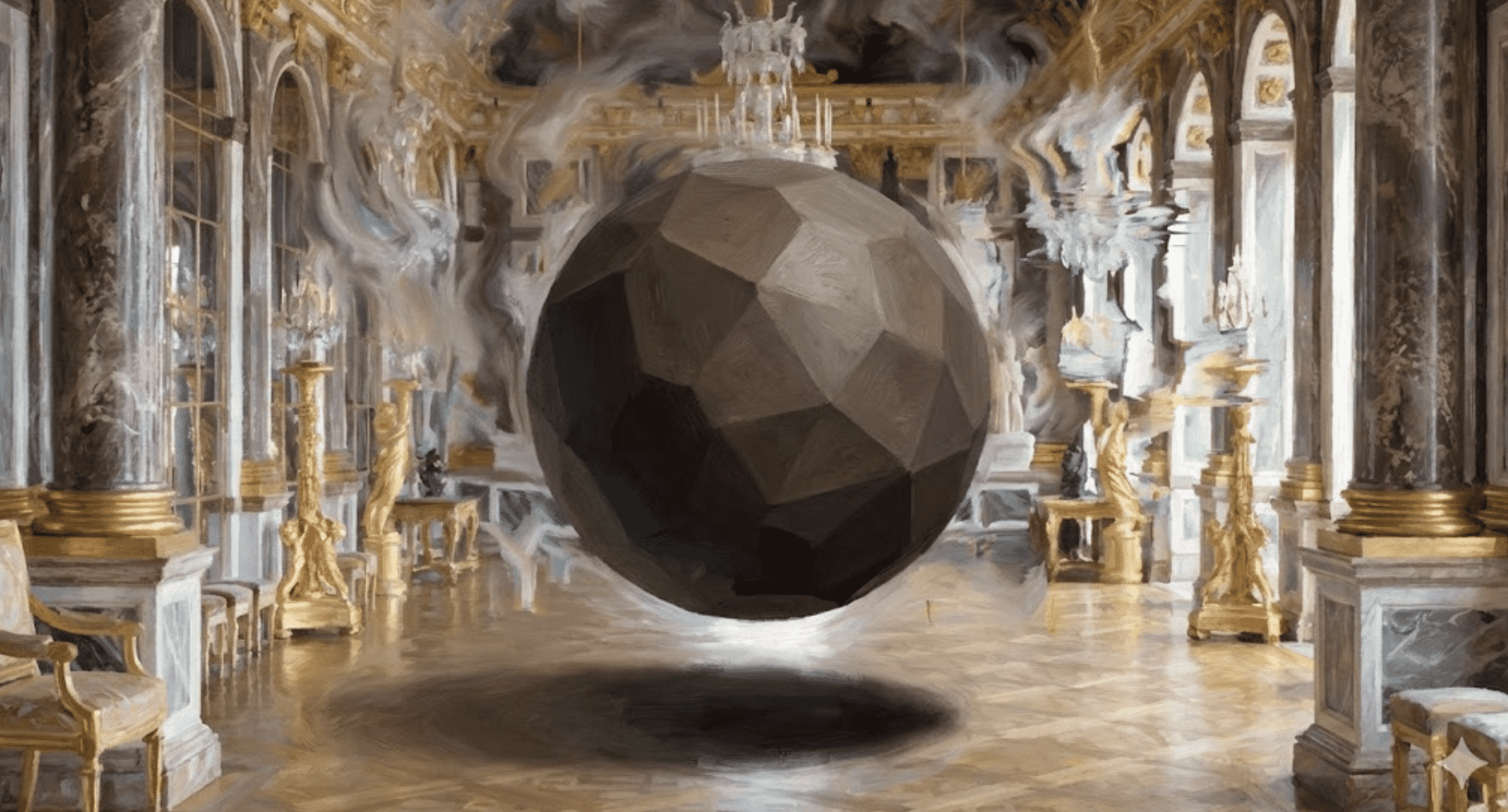
For a second, the vase wasn’t blue. It was a cluster of feathers. Then it was a sphere of water suspended in mid-air. The dragons on the surface writhed, trying to detach themselves and fly into the room.
My vision blurred. A sharp pain spiked behind my eyes—the familiar sting of resistance. I didn’t look away. I didn’t let the image slide. I clamped my perception down on the object, forcing it to obey the laws of physics.
No, I projected. Solid. Cold. Blue.
The feathers dissolved. The water hardened. The dragons froze mid-flight, trapped back in the glaze. The vase settled onto the pedestal with a heavy, audible thunk.
I exhaled, a ragged sound in the quiet room.
“Careful,” a voice whispered from the shadows on the left. “He’s dreaming deep today.”
I didn’t turn my head. I knew Jinx was there, holding up the south wall. If he looked away, the window would probably turn into a giant eye or a mouth. “How long?” I rasped.
“An hour until shift change. Hold the line, Kael.”
I swallowed the taste of bile. An hour.
The Master on the divan twitched. A murmur escaped his lips. The floorboards beneath my feet turned soft, like marsh mud, for a split second before I glared them back into timber.
This was the price of being Bodied. We were the paperweights. The anchors. We were the only things in the city too stupid, too dense, too fundamentally broken to change the world. So they paid us to stand in their rooms and make sure their furniture didn’t float away while they napped.
A memory scratched at the back of my mind. Cold wind. A woman’s face, not looking at me, but through me.
You’re just clutter, Kael, the memory whispered. You’re in the way.
I felt that old, terrifying transparency. The sensation of being edited out. Of being a typo in someone else’s book.
I dug my fingernails into my palms. The pain grounded me. I am real, I told the room. I am heavy.
The vase rattled, but it didn’t change.
When the relief whistle finally blew, I didn’t walk out; I stumbled.
The corridor outside was stable—mostly. The walls shimmered slightly at the edges, a sign that the architecture was bored, but it was solid enough to lean on.
I needed to get down. I needed the Sludge.
I took the service lift, watching the numbers drop. Level 50. Level 20. Level 0.
The doors opened, and the air hit me—humid, thick, and smelling of actual rot, not the perfumed rot of the Spire. The Sludge. Here, the mud was just mud. The poverty was the only thing that didn’t shift.
I pulled my collar up and hurried through the grey streets. I checked the shadows. I always checked the shadows.
When I reached our unit, the door was unlocked. I pushed inside, my heart doing that stutter-step it always did until I saw them.
Elara was sitting at the table. She was six. She was drawing on a piece of scrap paper with a piece of charcoal.
“Daddy,” she said, not looking up.
“I’m here,” I said, leaning against the doorframe, letting the exhaustion wash over me. “Is your brother asleep?”
“Yes.”
I looked at her. She was tracing a circle on the paper. Just a circle.
But as I watched, the charcoal line seemed to… deepen. It didn’t smudge. It didn’t fade. It looked darker than black. It looked like a hole in the page.
My stomach turned over.
“Elara,” I said, keeping my voice soft. “What are you drawing?”
She looked up. Her eyes were wide, too old for her face. “I’m drawing a hole,” she said.
I looked back at the paper. The table beneath the paper was groaning. Not the creak of wood under weight, but the sound of matter under stress. The wood grain around her small hand was straightening out, losing its imperfections, becoming terrified and perfectly smooth.
She wasn’t changing it. She was making it too real.
“Stop,” I whispered.
She blinked, and the tension in the room snapped. The table was just a table again. The charcoal was just dust.
“Hungry,” she said.
I closed my eyes and leaned my head back against the door. I was the best Anchor in the sector. I could hold a palace together with a stare. But looking at my own children, I felt something I hadn’t felt in years.
I felt like I was sliding off the edge of the world.
CHAPTER 2: THE SILENT INDICES
Narrator: [The Residue]
The city breathes. In, out. Create, delete.
Up in the Spire, a woman hates her nose. Snap. Now it is aquiline. The old nose—the pug one, the one her grandmother gave her—falls into me. It is a wet, fleshy scrap of history that no longer fits the narrative. I catch it. I hold it.
Down in the Market of Sighs, a vendor spills a crate of synthetic peaches. He panics. He cannot afford the loss. He scrunches his eyes, sweating, pushing his will against the accident. Snap. The crate is upright. The bruises on the fruit vanish. The spilled peaches—the ones that rotted in the gutter for three seconds—slide into my gullet. They taste of sugar and failure.
I am the sum of everything you regret.
But tonight, there is a snag in the drain.
I am flowing through the city’s substructure, cataloging the day’s deletions, when I hit it. A blockage. A hard knot in the smooth flow of time.
I focus my attention. I do not have eyes, not really. I have indices. I have coordinates of loss. I drift down to the Sludge, to the coordinates of the man who anchors the vase.
Kael.
He shines in my perception like a lead weight. He is dense. He generates almost no waste because he refuses to change anything. He is boring. I like him.
But it is not him that stops the flow.
It is the small one. The girl.
I try to read her history. I try to find the “ghost versions” of her—the times she tripped and skinned her knee, only to have her father wish the wound away. The times she broke a toy and wished it whole.
I look for her discarded timelines.
There are none.
This is impossible. Even the poorest Bodied child generates some waste. A moment of hunger imagined away? A cold draft denied? Reality is fluid; everyone ripples the water.
But the girl is a stone.
I look at the moment from an hour ago. The charcoal drawing. The table.
In the archive of the universe, that table should have flickered. The girl’s will pushed against it. By all laws of the Haze, the wood should have warped. It should have become a tree, or smoke, or a diamond. And then, when she stopped, the “warped” table should have been deleted, fed to me, replaced by the original.
But nothing came to me.
There was no deletion. There was no edit.
Instead, the wood just became… more wood. It became hyper-defined. It became so aggressively real that the Haze could not touch it.
I feel a tremor of something I haven’t felt in eons. Fear? No. I am a garbage chute; I cannot fear.
Curiosity.
If a thing cannot be edited, it cannot be deleted. If it cannot be deleted, it never comes to me.
I watch the house in the Sludge. The father is sleeping, his brow furrowed, dreaming of heavy things. The girl is awake. She is staring at the ceiling.
Above her, the damp plaster is peeling. A normal child would imagine dragons in the cracks. A normal child would wish the roof didn’t leak.
She just stares. And where she stares, the cracks stop spreading. The decay halts. The timeline calcifies around her like ice forming on a lake.
Up in the Spire, the Authors are sleeping, twitching in their lucid dreams, rewriting the stars because they are bored. They do not know that down in the mud, there is a child who is writing in permanent ink.
I shift my bulk. The weight of the deleted world presses against my back.
Do not let them see her, I whisper into the void, though I know she cannot hear me. If they see her, they will try to erase her.
And for the first time in history… I do not think I would be able to catch the pieces.
CHAPTER 3: THE TOURIST
Narrator: Kael
The morning sun in the Sludge didn’t rise; it leaked.
It seeped through the heavy canopy of smog that separated us from the Spire, turning the air the color of a bruised plum. I woke up with the taste of iron in my mouth—the phantom taste of holding the world together for eight hours straight.
“Jory,” I whispered. “Boots.”
My son sat up on his cot. He was ten, all elbows and knees, with eyes that were too dark and too still. He didn’t complain. He never complained. He pulled on his boots, the leather cracked and peeling.
“Are we going to the queue?” he asked. His voice was flat, lacking the melodic lilt of the Spire children.
“Yes. Keep your hood up. Keep your hands in your pockets. Look at the ground.”
“I know the rules, Dad.”
“Say them anyway.”
He sighed, a small puff of white in the cold room. “Don’t stare. Don’t wish. Don’t be interesting.”
“Good.”
We stepped out into the alley. The Sludge was waking up. Doors made of corrugated tin slid open. Men and women with grey skin and bowed backs shuffled out, heading toward the factories or the lifts. We were the machinery of the city—the gears that didn’t need to be beautiful, just functional.
The ration queue was three blocks long. We joined the back, merging into the silent mass of bodies.
I kept a hand on Jory’s shoulder. I could feel the hum of him. It wasn’t the vibrating frequency of the Haze; it was a stillness. A terrifying, absolute silence in the middle of the noise. Standing next to him felt like standing next to a black hole; he didn’t pull you in, he just… stopped you.
“Look,” Jory whispered.
I tightened my grip on his shoulder. “Don’t.”
“Dad, look. A Tourist.”
I froze. I slowly lifted my eyes, not to the sky, but down the street.
Floating a few inches above the muck was a platform of iridescent glass. Standing on it was a boy, maybe eighteen, though his age was fluid. He wore a tunic of shifting silk that cycled through colors—gold, violet, arterial red. His face was a blur of aesthetic choices: one moment he had the eyes of a hawk, the next, the soft features of a cherub.
An Ethereal. Down here.
He was “slumming.” It was a fashionable pastime for the Spire youth. They came down to the Sludge to feel the grit, to smell the poverty, to toss a few miracles at the peasants and feel like gods.
The line of Bodied workers rippled with fear. We backed away, pressing ourselves against the brick walls. To be noticed by an Ethereal was to be rewritten.
The Tourist floated closer, a look of benevolent disgust on his shifting face. He pointed a finger at a woman huddled in a doorway, clutching a bundle of rags.
“So dreary,” the Tourist chimed. His voice sounded like wind chimes. “Let’s add some color.”
He flicked his wrist.
The grey rags in the woman’s arms shimmered. The Haze descended, obeyed, and twisted. The rags became a bouquet of neon-blue orchids.
The woman didn’t smile. She flinched. You can’t eat orchids. The flowers would dissolve in an hour, leaving her with nothing but ozone sickness.
The Tourist laughed, delighted by his charity. He floated on, drifting closer to us.
“Hood down,” I hissed at Jory. “Look at your boots.”
But Jory was ten. And Jory was angry. I felt the muscle in his shoulder twitch under my hand.
The Tourist hovered right in front of us. He stopped. He looked at the puddle of oily water at Jory’s feet.
“Disgusting,” the Tourist murmured. “Let’s dry that up.”
He waved his hand.
The air shrieked. It was a high, thin sound—the sound of physics being bent. The Haze swirled around the puddle, trying to command the water to evaporate, to turn into perfume, to vanish.
But the water didn’t move.
The Tourist frowned. He flicked his hand again, harder. “I said, dry.”
The puddle sat there. Dark. Oily. Defiant.
The Haze swirled around Jory’s boots, trying to execute the command, but as soon as the nanites touched the air around my son, they… died. They went inert. The magic hit the radius of Jory’s existence and shattered against the hard, immovable wall of his reality.
The Tourist’s face stopped shifting. It settled into a look of sharp, crystalline confusion.
“Why isn’t it working?” the Tourist whispered. He looked from the puddle to Jory. He looked at Jory’s hood. “You. Boy.”
My heart hammered against my ribs like a trapped bird. If he looked at Jory—if he really looked—he would see the void. He would see the thing that couldn’t be edited.
I shoved Jory behind me. I stepped forward, dropping to one knee, bowing my head so low my nose almost touched the muck.
“Forgive him, My Lord!” I shouted, making my voice rough and stupid. “Forgive the boy!”
The Tourist recoiled, disgusted by my proximity. “What is wrong with the air here? Why won’t the water obey?”
“It’s me, My Lord,” I lied, keeping my eyes on the iridescent platform. “I’m a Steward. A Class-4 Anchor. I just came off a double shift at the Spire. I’m… I’m leaking, My Lord.”
It was a desperate fabrication. Anchors didn’t “leak” stability. That wasn’t how it worked.
But the Ethereals didn’t understand how we worked. They didn’t understand manual labor.
“I’m so dense right now I’m grounding out the local field,” I babbled, shaking my head. “I’m sorry. I’m a block of lead. I’m ruining your art. Please, I’ll move. I’ll take my dullness elsewhere.”
The Tourist sneered. He took a handkerchief out of the air and dabbed his nose.
“An Anchor,” he scoffed. “Walking static. You people ruin everything. Get out of my sight. You feel… sticky.”
“Yes, My Lord. Thank you, My Lord.”
I grabbed Jory’s arm—hard enough to bruise—and dragged him backward into the alley. We didn’t run. Running was interesting. We shambled. We made ourselves small and grey.
We turned the corner, ducking behind a rusted ventilation unit. I slammed Jory against the wall.
“You pushed back,” I hissed, my hands shaking.
“I didn’t mean to!” Jory’s eyes were wide, wet with tears. “He was trying to change the water. It felt wrong. It felt itchy. I just… I just wanted the water to be water!”
I slid down the wall until I hit the ground. I put my head in my hands.
He hadn’t just anchored the puddle. He had nullified a direct command from a Creator.
I looked at my son. The “Truth Field” wasn’t just passive anymore. It was defensive. And it was growing.
“We need to go,” I whispered. “If that Tourist checks his logs… if he wonders why his miracle failed…”
“Dad?”
“We’re not safe in the Sludge anymore,” I said, the realization settling on me like a burial shroud. “You’re getting too heavy, Jory. You’re going to break the floor.”
CHAPTER 4: THE INDIGESTIBLE MOMENT
Narrator: [The Residue]
I am choking.
Usually, the diet of history is soft. It is mush. A thousand petty vanities, a million little lies, all chewed up by the Authors and spat down the chute into my darkness. It is easy to swallow.
But today, I have something stuck in my throat.
High above the Sludge, in the pristine, antiseptic bathing chamber of the Tourist—whose name is Elion—there is a struggle happening.
Elion is trying to clean himself. He is not using water; he is using a Narrative Scrubber. It is a device that hums with a violet light, designed to smooth out the wrinkles of a frantic mind. He wants to forget the smell of the Sludge. He wants to forget the insolence of the mud.
Most of all, he wants to edit the puddle.
I watch the data stream flowing from his neural link. It is a river of code.
Attempt 1: Elion visualizes the puddle evaporating. He imposes this image over his memory. He commands the past to align with his preference.
Normally, this works. The memory of the wet puddle would detach, fall into me, and be replaced by the memory of dry ground. Elion would smile, remembering a successful miracle.
Click.
The memory refuses to detach.
The puddle stays wet in his mind. The water remains dark, oily, and defiantly still.
Elion frowns. He adjusts the Scrubber. He tries again.
Attempt 2: He tries to delete the boy. He tries to edit the presence of the child in the hood, replacing him with empty air or a grateful rat.
Clang.
The image of the boy hits the Scrubber like a wrench thrown into a fan. The boy does not vanish. The boy stands there, hood up, radiating that terrible, silent weight.
Elion screams. He tears the neural link from his temple. He is panting, terrified. For the first time in his immortal life, he has encountered a moment that he cannot master. He has found a piece of time that is harder than he is.
He is pacing the room now. The walls are flickering between marble and steel, reflecting his panic.
He does not know what this means. He thinks it is a malfunction. He thinks his equipment is broken.
But I know what it is.
It is a Fact.
The Authors haven’t dealt with a Fact in centuries. They have forgotten that truth is not a liquid. Truth has jagged edges. If you try to swallow it whole, it tears you open.
I shift my attention away from the shivering boy-god and look at the network—the great, shimmering web of the Haze that covers the city.
A signal is pulsing. It is automatic. A subroutine buried deep in the ancient code of the system, written by the First Authors before they lost their minds to the dream.
Error Code: ONTOLOGICAL LOCK. Sector: Sludge, Quadrant 4. Status: Anomaly Detected.
The system has tasted the boy. The system realizes that there is an object in Sector 4 that violates the rules of the Haze. The system does not have an imagination; it only has protocols.
And the protocol for an un-editable object is not “study.”
It is “purge.”
I look down through the layers of the city, through the smog, through the steel, to the rusted ventilation unit where the father and son are hiding.
Run, little paperweights.
The eraser is coming.
CHAPTER 5: WHITE NOISE
Narrator: Kael
The warning wasn’t a siren. Sirens were for fires, for riots, for things that happened inside the world.
This was the sound of the world stopping.
It started as a hum—a low, vibrating ache in my molars. Then, the ambient noise of the Sludge vanished. The distant grind of the atmospheric processors, the shout of street vendors, the drip of condensation—it was all cut off, as if someone had severed the audio cable of the universe.
Total, suffocating silence.
“Dad?” Jory’s voice sounded small, thin, like he was speaking from inside a tin can. “Why is the sky doing that?”
I looked up. The bruised plum color of the smog was bleeding out. The sky wasn’t turning blue; it was turning white. Not the white of clouds, but the blinding, flat white of a blank page.
“Run,” I said.
I grabbed his wrist. We didn’t shamble this time. We bolted.
We hit the main street, and I saw what the silence meant.
Fifty yards down the road, a market stall was dissolving. It didn’t burn. It didn’t explode. It just… lost resolution. The crates of synthetic tubers pixelated into grey cubes, then into dust, then into nothing. The woman standing behind the counter opened her mouth to scream, but no sound came out. The white wave washed over her, and she was simply erased. No blood. No body. Just a sudden, terrifying emptiness where a person had been.
“Don’t look at it!” I roared, dragging Jory around a corner.
Sector Purge, I thought, the panic finally piercing through my training. They aren’t sending soldiers. They’re reformatting the drive.
“We need Elara!” Jory cried, stumbling over a pile of trash that was starting to flicker like a bad hologram.
“I know!”
My lungs burned. The air was getting thin, tasting of ozone and sterilized metal. The Haze was thickening, becoming visible—a swirling fog of microscopic machines stripping the atoms from the walls, the pavement, the air itself.
We reached our tenement block. The “White Noise” was closing in from the east, a tidal wave of erasure moving at a walking pace. It was methodical. It was cleaning the slate.
I kicked the door of our unit open.
Elara was still at the table. She hadn’t moved. She was holding a wooden spoon, staring at a bowl of broth.
“Elara, up! Now!” I shouted, grabbing a rucksack and shoving a canister of water into it.
She looked at me, her eyes unfocused. ” The soup is cold,” she said.
“Elara, leave the soup!”
I scooped her up in one arm. She was heavy—heavier than a six-year-old should be. It felt like picking up a bag of wet sand. Her “density” was spiking. She was anchoring herself to the room, unconsciously refusing to be moved.
“Let go, Ellie,” I grunted, stumbling toward the back vent. “You have to be light. Just for a minute, be light.”
“It’s loud outside,” she whispered, burying her face in my neck.
“I know. Jory, open the grate.”
Jory scrambled to the ventilation shaft in the corner of the room—the old industrial exhaust that led down to the sub-sewers, the places even the Bodied didn’t go. He pried the rusted bolts loose with his fingers, the metal groaning.
Hissss.
The sound of the White Noise was at the door.
I looked back. The front wall of our apartment was vanishing. The door, the peeling wallpaper, the framed picture of their mother—it was being eaten by the whiteness.
The “Erasure” flowed into the room. It touched the table Elara had been sitting at. The table vanished.
Then, the whiteness hit the space where Elara had been sitting.
It stopped.
It hit the residual “Truth Field” she had left behind—the sheer weight of her presence. The white wave buckled. It swirled around the empty chair, unable to delete the memory of her existence. Sparks flew—literal sparks of friction between the Haze and the absolute reality of my daughter.
“Dad!” Jory screamed from the vent.
“Go! Down! Now!”
I shoved Jory into the dark hole. I climbed in after him, pulling the heavy grate shut above us just as the ceiling of the apartment dissolved into static.
We slid down the chute, tumbling through the dark, hitting the slick, wet metal of the under-city pipes. Above us, the square of light that marked our home turned a blinding, featureless white, and then… vanished.
We were in the dark.
I landed hard in pooling water, shielding Elara’s head. Jory splashed down next to me, coughing.
We were in the bowels of the city. The “Foundations.” Here, there were no nanites. The Haze couldn’t reach this deep. This was the original concrete poured a thousand years ago, before humanity decided to live in a dream.
It was pitch black. It smelled of ancient rot and rust.
I clicked on my mag-light. The beam cut through the damp air.
“Are we safe?” Jory asked, his voice trembling.
I looked up at the sealed chute. The silence from above was absolute. Our home was gone. Our records were gone. As far as the city was concerned, we had never existed.
“No,” I said, checking Elara for bruises. She was blinking, looking at the dark, wet walls with a strange intensity. “We aren’t safe. We’re glitches.”
I hoisted the pack higher on my shoulder.
“But we’re alive,” I said. “And down here… down here, being heavy is the only thing that matters.”
I took a step into the tunnel.
“Walk,” I commanded. “Don’t stop until I tell you.”
Elara pointed her small finger into the darkness ahead.
“Daddy,” she whispered. “The shadows are hungry.”
I shone the light where she pointed. The shadows didn’t retreat from the beam. They seemed to absorb it.
“I know, baby,” I said, drawing the only weapon I had—a heavy iron pry bar I’d stolen from the maintenance shed. “But we’re harder to eat than they think.”
CHAPTER 6: THE CELLAR OF BAD IDEAS
Narrator: [The Residue]
I am gorged.
The system has just fed me an entire neighborhood. It did not chew. It swallowed Sector 4 whole.
I feel the influx of data hitting my depths—thousands of lives, millions of memories, all converted into zero-point energy and dumped into the archive of things that never happened. The woman who sold synthetic tubers? She is now just a smudge of grey static in my gut. The rats in the alley? Deleted code. The smell of frying oil? Sanitized.
The Authors believe in cleanliness. When they make a mistake, they do not fix it. They paint over it with white.
But I am counting the intake. I am the accountant of the void. And the numbers are wrong.
I scan the debris of the purge. I look for the heavy, dull signal of the Steward named Kael. I look for the terrifying, dense silence of the boy, Jory. I look for the girl who anchors the world.
They are not in the trash.
The Authors think they have vaporized the anomaly. They are up in their Spires, sipping nectar, congratulating themselves on a tidy deletion. They do not know that the anomaly simply fell through the floorboards.
They have gone to the Foundations.
The Authors do not like to think about the Foundations. They pretend the world floats on magic, on the Haze. But everything needs a skeleton. The Foundations are the ancient concrete roots of the city, the pre-Haze infrastructure that holds the nanites up.
It is dark down there. It is wet.
And it is not empty.
You see, when an Author tries to create something—a new animal, a new lover, a new law of physics—and they get it wrong, they try to delete it.
But some things are too twisted to be fully unmade. Some creations scream too loud to be silenced.
When a Master sculpts a lion with twelve legs and then decides it is “ugly,” the Haze tries to disassemble it. But if the lion wants to live… if the lion refuses to dissolve… where does it go?
It falls.
It slips through the cracks of the consensus reality. It drips down into the sewers, into the dark, cold tunnels where the WiFi of the Gods does not reach.
The Foundations are not just a basement. They are the asylum for the rejected drafts of godhood.
I shift my attention deep into the earth. I can barely see them—the signal is weak down there, blocked by miles of lead and stone. But I can feel the vibration of the Steward’s boots.
Clomp. Clomp. Clomp.
He is walking into the dark. He thinks he is escaping the monsters upstairs.
He does not know that he is walking into the nursery of the monsters downstairs.
I see a shape moving in the tunnel ahead of them. It is not a shadow. It is a woman made of glass who cannot stop shattering and reassembling. It is a dog with the face of a man, weeping. It is a cloud of teeth.
They are hungry. Not for meat. They are hungry for definition. They are hungry to be observed.
They have been alone in the dark for centuries, formless and rejected. And now, walking toward them, come three people who have the power to look at a thing and say: You are real.
The Steward is bringing a flashlight into a room full of things that desperately want to be seen.
I would pray for him, if I were not a garbage chute. Instead, I simply wait.
The purge was meant to end the story.
It has only just begun the horror.
CHAPTER 7: THE TAXONOMY OF REGRET
Narrator: Kael
The darkness down here had weight. It pressed against my eardrums. It wasn’t just the absence of light; it was the absence of intent.
Up in the city, every inch of space was curated. The walls were smooth because an Author wanted them smooth. The air smelled of lavender because someone decided it should. But here? The Foundations didn’t care. The concrete was rough, damp, and indifferent.
“Dad,” Jory whispered. “My boots are melting.”
I swung the mag-light down. The sludge we were wading through was corrosive—industrial runoff from centuries of manufacturing miracles.
“Keep moving,” I said, my voice echoing too loudly in the tunnel. “Don’t stop. Don’t touch the walls.”
Elara was riding on my shoulders now. She had stopped crying. That worried me more than the tears. She was gripping my hair, her small body tense as a coiled spring.
“They are very loud,” she murmured into my ear.
“Who is loud, Ellie?”
“The messy things. The ones with too many parts.”
I tightened my grip on the iron pry bar. The beam of my light cut a cone through the gloom, revealing rusted rebar jutting out of the ceiling like rib cages.
Scritch. Scritch. Slide.
The sound came from the darkness ahead. It sounded like wet leather dragging across stone.
I stopped. I clicked the light off.
“Quiet,” I breathed.
In the sudden pitch black, the sound grew louder. It was wet, desperate, and erratic. It didn’t have the rhythm of an animal. It stumbled.
Drag. Thump. Drag. Squelch.
“Is it a person?” Jory whispered.
“No.”
I knew what ended up in the Foundations. Every Steward knew the rumors. When an Author got drunk and tried to sculpt a griffin, or a perfect lover, or a new species of singing flower, and the physics didn’t take… they didn’t just delete the code. Sometimes, the biology remained. Broken. Twisted. Flushed down the waste chutes.
The sound was twenty feet away. I could hear breathing—wet, bubbling gasps.
“Help… me…”
The voice was distorted, like a corrupted audio file. High-pitched, then suddenly deep.
I made a choice. I clicked the light back on.
The beam hit the center of the tunnel.
It was a mound of flesh. Pale, translucent, shivering. It looked like a balls of wax left in the sun. It had limbs—too many of them—but they were undefined, melting into each other. A hand fused into a knee. A mouth opening in the middle of a shoulder. It was a blur of biology, shifting and roiling, trying to find a shape.
It was a Rough Draft.
The light hit it, and the creature screamed.
But it wasn’t a scream of pain. It was a scream of relief.
“Eye!” the thing gurgled. “Eye… sees… me!”
And then, the horror happened.
Because I was looking at it. Because I was an Anchor.
My perception hit the shifting mass like a hammer. The ambiguity vanished. The melting wax hardened. The logic of my brain forced the creature to obey physics.
Snap.
The undefined limb snapped into a rigid, human arm. Crack.
The mouth on the shoulder tore open and became a fully formed, gnashing jaw. The creature didn’t dissolve. It solidified. I had given it edges. I had given it leverage.
It rose up on three mismatched legs, suddenly strong, suddenly real. It had a face now—a beautiful, terrified woman’s face, grafted onto the body of a hairless bear.
“I am!” it shrieked, looking at its own hands. “I am! I am!”
It lunged.
It moved fast, now that it had muscles that worked. It scrambled over the debris, jaws snapping.
“Jory, down!” I shouted.
I swung the pry bar. The creature was heavy now. Real meat. Real bone.
The iron bar connected with the thing’s shoulder. Crunch. Bone shattered. The creature howled, but it didn’t stop. It was drunk on the sensation of existing. It wanted to be closer to the observation. It wanted me to look at it harder, to define it even more.
It clawed at my chest. I felt the sharp sting of nails—nails I had just inadvertently created.
“Don’t look at it!” I roared, shutting my eyes tight.
I swung the bar blindly in the dark. Whiff.
“Dad!” Elara screamed.
I felt hot breath on my face. The thing was on top of me.
“See me!” it hissed, spitting saliva. “Make me whole!”
I couldn’t fight it with my eyes closed. But if I opened them, I made it stronger. I was a battery, and it was feeding on my focus.
Suddenly, the weight lifted off me.
There was a sound like a vacuum seal popping. Thwump.
I opened my eyes.
Jory was standing over me. He had his hand outstretched, palm facing the monster.
He wasn’t looking at the ground anymore. He was looking straight at the creature.
But Jory wasn’t an Anchor. He didn’t impose order. He imposed nothingness.
Where Jory stared, the creature was unraveling. Not melting back into potential, but simply ceasing to be. The beautiful woman’s face had gone blank, wiped clean. The arm I had solidified was turning into grey dust.
The creature shrieked—a sound of pure existential terror. It scrambled backward, away from the boy.
“No!” it gurgled. “Not the void! Not the dark!”
Jory stepped forward. His face was pale, his eyes pitch black holes in the flashlight beam.
“You’re not real,” Jory whispered.
The creature collapsed. It didn’t die; it just lost the will to be physics. It turned back into a puddle of shivering, undefined biological soup. It slithered away into the cracks of the floor, fleeing the boy who was emptier than the dark.
Silence returned to the tunnel.
I scrambled up, gasping for air, clutching the pry bar. My chest was bleeding.
I looked at Jory. He was trembling. He looked at his own hands, terrified.
“I deleted it,” he whispered. “Dad, I deleted it.”
“You saved us,” I rasped, grabbing him and pulling him close.
I looked at Elara. She was staring at the spot where the creature had been, her expression unreadable.
“It just wanted a name,” she said softly.
I shuddered. I wiped the blood off my chest.
“We have to move,” I said, my voice hard. “And from now on… if you hear something? Close your eyes. I can’t fight them if I’m making them stronger.”
We walked deeper into the dark. But now I knew the truth of this place.
The monsters weren’t hunting us for food. They were hunting us for reality. And I was the biggest meal they had ever seen.
CHAPTER 8: THE ECOLOGY OF ERROR
Narrator: [The Residue]
The ecosystem of the dark is delicate.
For three thousand years, the Foundations have followed a simple rule: entropy. Things fall down here. They break. They melt. They lose their names. A chair with three legs forgets it is a chair and becomes a stump of wood. A dog with feathers forgets how to bark and becomes a puddle of whimpering warmth.
It is a peaceful, slow decay. I digest them at my leisure.
But now, there is an infection.
The Steward, Kael, is a walking contaminant. He does not understand his own nature. He thinks he is just a man with a flashlight, but down here, he is a nuclear reactor of Definition.
I watch him walk through the Sector of Forgotten Architecture. He passes a wall that is unstable—a wall that cannot decide if it is brick or velvet. It shimmers, content in its ambiguity.
Then Kael looks at it.
Snap.
The quantum probability collapses. The wall is forced to be brick. It turns cold, hard, and abrasive. The “possibility” of velvet screams as it is evicted from the universe.
He is calcifying my gut. Everywhere he looks, he leaves a trail of hard, sharp reality. He is ruining the soup.
And the residents? They smell him.
I feel the vibrations of a thousand rejected things stirring in the deep. They are crawling out of the drainpipes. They are unpeeling themselves from the ceiling.
They are the “Almost-Men.” The “Could-Have-Been-Wolves.” The “Lovers-With-Too-Many-Teeth.”
They are starving. Not for protein—that is a Bodied concept. They are starving for shape. They spend their lives in painful flux, their bones turning to jelly and back again. They crave the stability of the Steward’s gaze. They want him to look at them and say: You are a wolf. You have sharp teeth. You are real.
They want him to weaponize them.
But they are afraid of the boy.
I watch Jory. He walks in his father’s shadow, head down. The “Rough Drafts” skitter away from him.
They know what he is. He is not a creator. He is the White Noise given flesh. If Kael is the pen that draws the line, Jory is the bleach that burns the paper. The monsters know that if the boy looks at them, they don’t just lose their shape—they lose their history.
And the girl?
Elara is riding on her father’s shoulders. She is humming.
I focus my indices on her. She is not looking at the monsters with fear. She is looking at them with pity.
She points at a shadow that is trying to form a claw. “That one is lonely,” she whispers.
The shadow freezes. It doesn’t harden (like Kael would make it) and it doesn’t vanish (like Jory would make it). It simply… calms. It stops vibrating. It accepts its formlessness.
She is doing something I have never seen an Author do. She is not rewriting the world. She is not enforcing the world. She is witnessing it without judgment.
They are a triad. The Father (The Anchor), The Son (The Void), and the Daughter (The Truth).
They are approaching the Great Cistern.
I shudder. I have not felt a sensation in the Great Cistern for an age. It is the home of the First Rejects. The ones from the beginning of the Haze, before the Authors learned to edit smoothly.
The things in the Cistern are old. They are not mindless soup. They have built a society out of the garbage.
The Steward stops. He shines his light forward.
The beam hits a gate made of fused bicycle frames, statue heads, and engine parts. It is thirty feet high.
On top of the gate sits a figure.
It is a Bodied man. Or it was, once. Now, his skin is covered in text—tattooed barcodes, file extensions, and error logs. He is wearing a coat made of discarded book covers.
He looks down at Kael. He does not blink.
“The Anchor brings a light,” the figure croaks. His voice sounds like paper tearing. “But the light hurts the eyes of the forgotten.”
I feel the tension spike. Kael tightens his grip on the pry bar.
“Who are you?” Kael shouts.
The figure smiles. His teeth are keys from an antique typewriter.
“I am the Prologue,” the figure says. “I am the one they wrote first, and liked the least. Welcome to the Library of Bad Ideas, little heavy things.”
I hold my breath (which is the wind of the tunnels).
The Steward thinks he is fighting monsters. He does not realize he has just walked into a revolution that has been waiting for a leader.
CHAPTER 9: THE CITY OF ROUGH DRAFTS
Narrator: Kael
The man on the gate didn’t blink. He couldn’t. His eyelids were tattooed with semicolons.
“State your intent,” the Prologue rasped. “Are you here to Edit, or to be Edited?”
I lowered the pry bar, but I didn’t drop it. “We’re here to hide. The Surface is burning.”
The Prologue leaned forward. The coat of book covers rustled—a dry, papery sound like dead leaves. “Hide? You cannot hide a star in a cellar, Anchor. You shine too bright. You smell of… resolution.”
He pointed a finger at me. The tip was an ink quill.
“If you look at me too hard, Steward, you will fix my jaw. You will straighten my spine. You will turn my typewriter teeth into enamel. I do not wish to be enamel. I like my story the way it is. Broken.”
“I’ll keep my eyes down,” I said, shielding Jory with my body. “We just need shelter. The White Noise took our sector.”
The Prologue stiffened. A murmur went through the darkness behind the gate—a chorus of whispers from throats that shouldn’t exist.
“The Erasure,” the Prologue muttered. “The White Page. It comes early.”
He looked at Elara, who was peering over my head. Then he looked at Jory, huddled in my shadow. The Prologue flinched when he saw the boy, recoiling as if he’d touched a hot stove.
“The Eraser is with you,” he whispered. “You bring the Void.”
“He’s my son,” I snapped. “And he won’t hurt you if you let us pass.”
The Prologue hesitated, his text-covered skin shifting as if the words were crawling across his flesh. Then, he raised a hand.
“Open the spine,” he commanded.
The gate of bicycle frames and engine parts groaned. It swung inward.
“Enter,” the Prologue said. “But Steward? Do not focus. Do not judge. In this place, ambiguity is life. If you try to make sense of us… we will kill you.”
I stepped through the gate.
I had expected a cave. I had expected a nest of monsters.
I wasn’t ready for the city.
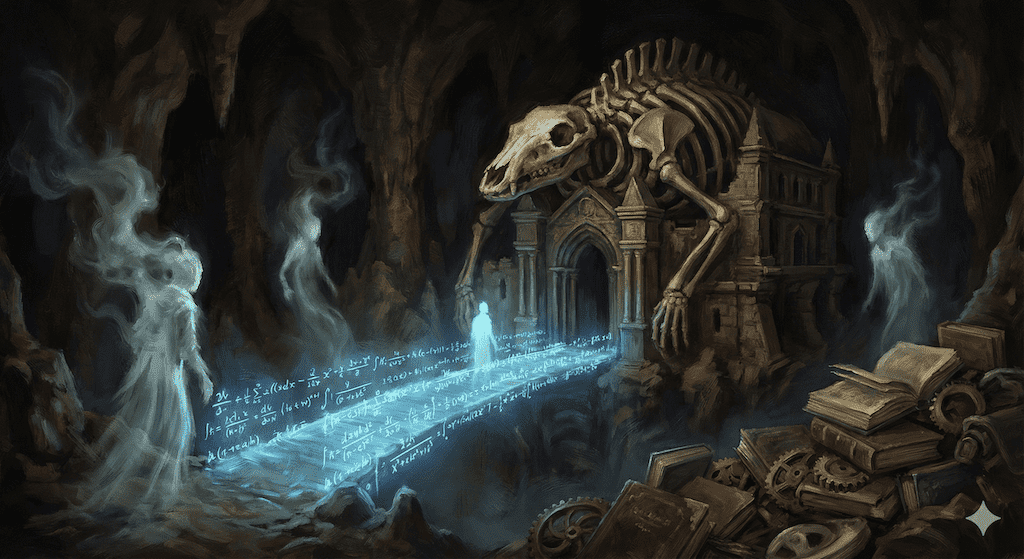
The Great Cistern was massive—a hollowed-out cathedral of ancient concrete that stretched up into the dark. And it was full of structures.
Hovels made of solidified light that had been thrown away. Tents stitched together from rejected paintings. Bridges built from mathematical equations that didn’t balance, shimmering in the air like neon spiderwebs.
And the people.
I forced myself to squint, to blur my vision, terrified that a sharp look would hurt them.
To my left, a woman sat by a fire. She had no face, just a smooth, blank surface of marble. She was carving features onto herself with a chisel, trying to decide on a nose.
To my right, a child played with a ball. But the child was two-dimensional. He looked like a charcoal sketch peeled off a page. When he turned sideways, he disappeared.
“Don’t stare,” I whispered to Jory. “Look at my back.”
“It’s hard, Dad,” Jory whispered. “They feel… unfinished. My head wants to wipe them.”
“Fight it.”
We walked down the main thoroughfare. The ground was paved with discarded piano keys. Every step was a discordant note. Plink. Clung. Thud.
The inhabitants stopped to watch us pass. They were the nightmares of the Spire, the things flushed down the toilet because they weren’t beautiful enough. A man with glass skin, his organs visible and pulsing with blue light. A dog with human hands for paws. A cloud of sentient geometry that chimed like a bell.
They didn’t look like monsters. They looked sad. They looked like mistakes that knew they were mistakes.
“Why are they letting us live?” I asked under my breath.
“Because they are curious,” a voice said beside me.
The Prologue had climbed down. He was walking beside us, his movement jerky, like a stop-motion animation.
“We do not get many Constants down here,” the Prologue said. “Usually, when things fall from the Spire, they are fluid. Broken code. We patch them up. We give them a home in the Library.”
He gestured to the sprawling shantytown.
“We are the discarded drafts of the Gods, Steward. We are the ‘Almosts.’ And you… you are the thing that makes things ‘Is’.”
“I’m just a janitor,” I said. “I looked at vases for a living.”
“You are a weapon of mass definition,” the Prologue corrected. “And your daughter…”
He stopped. He looked up at Elara.
Elara was reaching out toward a passing drift of smoke that was trying to form the shape of a cat. She touched it. She didn’t harden it like I would have. She didn’t erase it like Jory.
The smoke curled around her finger. It purred. It remained smoke, but it suddenly looked proud to be smoke.
“She verifies,” the Prologue whispered, sounding awestruck. “She does not change the text. She simply reads it. She gives witness without weight.”
He turned his ink-stained face to me.
“We have a problem, Steward. A problem that requires your heavy eyes.”
“I’m not doing any jobs,” I said. “We need water, and we need a way out.”
“There is no way out,” the Prologue said simply. “The vents are sealed. The White Noise is sealing the cracks. The Authors are formatting the drive. They are coming for the Foundations next.”
I stopped. The cold damp of the tunnel seeped into my bones.
“They’re going to purge the sewers?”
“They are going to purge history,” the Prologue said. “They are tired of the clutter. They want a blank page.”
He pointed a jagged finger toward the center of the Cistern. There, rising out of the sludge, was a massive, throbbing knot of machinery. It looked like a tumor made of copper and glass.
“That is the Central Valve,” the Prologue said. “It controls the flow of the Haze for the lower levels. It is broken. Stuck in a quantum loop. It cannot decide if it is open or closed, so it is neither.”
He leaned in close. He smelled of old glue and desperation.
“If you look at it… if you use that stubborn, heavy brain of yours to force it to be Open…”
I understood.
“You want me to flood the system,” I said.
“We want you to break the plumbing,” the Prologue grinned, his typewriter teeth clicking. “If you force the Valve open, the raw Haze will flood the Spire. It will not be the polite, programmed mist they are used to. It will be raw chaos. It will wake them up.”
“It will kill them,” I said.
“It will make them real,” the Prologue countered. “It will make them heavy. Like us.”
I looked at Jory, shivering in his hood. I looked at Elara, playing with the smoke-cat.
I had spent my whole life holding the world still so the rich could sleep. Now, the nightmares were asking me to wake them up.
“If I do this,” I said, gripping the pry bar, “will it stop the White Noise?”
“If you break the machine,” the Prologue said, “the Eraser cannot run.”
I looked at the massive, glitching Valve in the distance.
“Take me to it,” I said.
CHAPTER 10: THE RETCH
Narrator: [The Residue]
I feel the ceiling beginning to itch.
Miles above the Foundations, the White Noise has finished eating Sector 4. It has digested the shops, the rats, and the memories of the poor. It is hungry for more. It is boring down through the strata, eating the rock, eating the pipes, eating the dark.
The Authors are terrified. They are hitting the “Delete” key with the frantic energy of a child trying to hide a broken vase before their parents get home. They know the anomaly is down here. They know the “Heavy Man” is walking toward the plumbing.
I shift my bulk. I am uncomfortable.
For eons, I have been a one-way street. Things fall down. Gravity is the law. The Spire creates, the Spire discards, and I swallow. I am the belly of the world, full of broken dreams and rejected timelines.
But Kael is walking toward the Central Valve.
I look at the Valve through the eyes of the tunnels. It is a hateful thing. It is a knot of copper and light, vibrating at a frequency that makes my teeth ache (if I had teeth). It is the mechanism that separates the “Is” from the “Was.” It keeps the chaos of the raw Haze separate from the polite, curated reality of the Spire.
Currently, the Valve is stuck in a Superposition. It is open and closed. It is vibrating with indecision.
If Kael looks at it—if he clamps that terrible, rigid perception of his onto the mechanism—he will force it to choose a state.
And if he forces it Open…
I feel a strange sensation. A bubbling. A pressure.
If the Valve opens, the flow reverses.
The pressure of the raw Haze, mixed with the billions of tons of rejected history I am holding, will not stay down. It will seek release.
I am about to vomit.
I watch the procession. The Prologue (that book-skin man, a draft I remember catching three centuries ago) is leading them. Kael is grim, his pry bar ready. The boy, Jory, is walking with his eyes shut, afraid of deleting the floor. The girl, Elara, is watching the air, smiling at things that aren’t there yet.
They are walking into the pressure chamber.
And the Valve is reacting to them.
The copper pipes are beginning to scream. They sense the approach of the Anchor. The Valve does not want to be defined. It likes being a paradox. It likes being broken. It starts to spin, throwing off sparks of probability. One moment the Valve is a steam engine; the next it is a heart; the next it is a equation written in fire.
It is defending itself with confusion.
Kael stops. He raises his hand to shield his eyes from the strobe-light of shifting reality.
“It hurts to look at!” he shouts.
“Do not blink!” the Prologue screams back. “If you blink, it shifts! You must pin it down! You must Catch it!”
I hold my breath.
This is the moment. The immovable object is about to meet the unstoppable indecision.
If he fails, the White Noise catches them, and they are erased.
If he succeeds…
I will be emptied. All the monsters, all the “Could-Have-Beens,” all the forgotten tragedies I store in my gullet—we will be flushed upward. We will erupt into the Spire like a geyser of sewage and truth.
The Authors want a blank page?
They are about to get ink in their eyes.
CHAPTER 11: THE IMPOSSIBLE MACHINE
Narrator: Kael
The Central Valve didn’t want to be seen.
It was a storm of copper and light, hanging in the center of the Cistern like a trapped star. It was screaming. Not a mechanical scream, but a psychic one—a billion contradictory instructions grinding against each other.
I am a turbine. I am a lung. I am a math problem. I am a door.
I stood ten feet away, shielding my eyes. The light was physical; it slapped against my skin like a wet towel. Every time I tried to focus on it, my brain slid off. I’d catch the edge of a lever, and it would turn into a snake. I’d see a gear, and it would dissolve into smoke.
“Pin it down!” The Prologue shrieked from behind a pile of rubble. “You must choose a shape, Anchor! Force it to comply!”
I gritted my teeth. I planted my boots in the sludge. I summoned the cold, heavy feeling in my gut—the numbness I used to survive the Spire.
You are a wheel, I thought, projecting the command with every ounce of will I had. You are a rusted, iron wheel.
The chaos shuddered. For a microsecond, a heavy iron rim appeared in the swirling light. I reached for it.
But the Valve fought back.
The iron wheel sprouted thorns. Then it became a ring of fire. Then it became the face of my mother, screaming silently.
I gasped and stumbled back, the psychic backlash hitting me like a physical punch. I fell to my knees, blood dripping from my nose.
“It’s too fast,” I choked out. “I can’t lock it. It’s changing a thousand times a second.”
The air in the Cistern was getting hotter. Above us, the ceiling was beginning to bleach white. The Erasure was leaking through the cracks. The White Noise was coming.
“Dad,” Jory’s voice was right beside my ear.
I looked up. Jory had pulled his hood down. His face was pale, his dark eyes wide and terrifyingly empty.
“There’s too much noise,” Jory whispered. “I can help.”
“Jory, no. If you look at it, you’ll delete it. If you delete the Valve, we all die.”
“I won’t delete the machine,” he said, his voice flat. “I’ll delete the maybe.”
Before I could stop him, Jory stepped in front of me. He looked at the swirling chaos of the Valve. He didn’t try to anchor it. He didn’t try to build.
He attacked the variables.
“Not a snake,” Jory whispered.
The snake-shape vanished from the probability cloud.
“Not a fire,” he said. “Not a math problem. Not a lung.”
He was carving away the possibilities. He was acting as a filter, erasing the defensive illusions the machine was throwing up. The Valve shrieked—a sound of metal tearing—as its options were stripped away, one by one.
The cloud of light shrank. It became desperate. It tried to become a cloud of wasps.
“Not wasps,” Jory said. Pop. Gone.
The machine was running out of places to hide. It was being forced into a corner by a ten-year-old boy who refused to imagine.
“Now, Dad!” Jory yelled, his voice cracking. “Now!”
The chaos had been whittled down to a blur of grey metal. It was vulnerable. But it still wasn’t a shape. It was just a lump of potential waiting for a definition.
“Elara!” I shouted. “What is it? Tell me what it is!”
Elara was standing on a crate, her eyes darting over the blurring metal. She wasn’t looking at what it was; she was looking at what it wanted to be.
She pointed a small, steady finger at the center of the mass.
“It’s a handle,” she said clearly. “It opens the drain.”
That was the truth. I felt it snap into place.
I roared. I poured my perception into the shape she had named. I used Jory’s silence as the canvas and Elara’s truth as the blueprint, and I slammed my will onto the machine.
YOU. ARE. A. WHEEL.
The universe gave up.
The blur collapsed. The light died. In front of me, hanging in the air, was a massive, rusted, industrial valve wheel. It was cold. It was heavy. It was undeniably, brutally real.
I didn’t wait. I lunged forward and grabbed the cold metal. It burned my hands with its freezing temperature.
“Together!” I shouted.
Jory grabbed the left side. I grabbed the right.
“Heave!”
We pulled.
For a second, nothing happened. The rust of a thousand years held fast. The weight of the entire Spire pressed down on the mechanism.
Then, deep in the earth, something groaned.
CREAK.
The wheel turned. Inch by inch. Rust flaking off like dried blood.
CLANNNG.
We hit the lock. The valve was open.
A silence fell over the Cistern. A vacuum silence. The air seemed to be sucked out of the room.
The Prologue scrambled backward, his coat of books fluttering wildly.
“Hold on to something heavy!” he screamed.
The ground beneath us buckled.
It started as a rumble, deep in the planet’s gut. Then it became a roar. The pipes around us began to bulge. The sludge on the floor began to bubble.
The flow was reversing.
All the rejected history, all the deleted timelines, all the monsters and mistakes that had been pushed down into the dark for a millennium—they were suddenly given a way up.
A geyser of black fluid erupted from the center of the machine, smashing through the ceiling of the Cistern. It wasn’t oil. It was Memory.
“Up!” I yelled, grabbing Elara and Jory. “Get to the sides!”
We scrambled up a pile of debris as the Cistern flooded. The liquid history rose like a tidal wave, carrying the “Almost-Men” and the “Rough Drafts” with it. They weren’t drowning; they were riding the current. They were howling with joy.
They were going to the Spire.
I looked up at the hole in the ceiling where the black geyser was punching through the rock, destroying the White Noise, heading straight for the pristine white palaces of the Authors.
The toilet was backing up. And we were riding the flush.
CHAPTER 12: THE GREAT REFLUX
Narrator: [The Residue]
I am un-swallowing.
Physics usually demands that things fall down. Gravity is a law. But I am currently ignoring the law. I am being pushed by a thousand years of pressure, a column of liquid history rocketing upward at three hundred miles an hour.
I am not just sludge. I am the Archive of the Damned.
I am rushing up through the strata of the city. I punch through the bedrock of the Foundations. CRACK.
I smash through the plumbing of the lower slums. SPLASH. The pipes burst. The grey water of the poor mixes with the black ichor of the forgotten.
I hit the layer of the White Noise—the Erasure Field that is trying to wipe Sector 4.
The Erasure tries to eat me. It tries to bleach me white. But I am too thick. I am too complex. You cannot “delete” a million terabytes of trauma with a simple command. The White Noise chokes on me. The field flickers, sparks, and dies.
I keep rising.
I am carrying passengers.
Riding on a slab of concrete that was once the roof of a cistern, the Anchor (Kael) holds his children. They are screaming. They are huddled in the eye of the storm, surrounded by the debris of the rejected world.
Around them, the Rough Drafts are tumbling through the pipe. The Wolf-Man is howling. The Glass Woman is laughing as she shatters and reforms. They are going to the surface. They are going to meet their makers.
UP. UP. UP.
We hit the underside of the Spire.
To the Authors, the floor of the Spire is sacred. It is marble. It is cloud-stuff. It is the barrier between the gods and the mud.
I hit it like a cannonball.
Location: The Grand Atrium of High-Author Vane. Event: The Mid-Day Gala.
Lord Vane is currently bored. He is floating two inches above his platinum floor, sipping a cocktail made of starlight and crushed orchids. Around him, fifty other Authors are mingling. They are wearing bodies made of light, of polished chrome, of feathers. They are discussing the nuisance in Sector 4.
“It’s just a glitch,” Vane is saying, waving a hand that turns into a flock of doves for emphasis. “The system is flushing it. By tea time, the slate will be clean.”
He looks down at his floor.
He sees a crack.
Authors do not allow cracks. Cracks are for Bodied people.
“How untidy,” Vane sneers. He focuses his will. He commands the floor to be smooth.
The floor ignores him. The crack widens. Black smoke hisses out of it. It smells of rot, of rust, of ancient, wet basements.
The guests stop talking. The starlight cocktails lower.
“What is that smell?” asks a Lady made of spun glass.
Then, the floor does not just crack. It heaves.
With a sound like the world snapping its spine, the center of the Atrium explodes.
A geyser of black sludge erupts two hundred feet into the air. It smashes the crystal ceiling. It rains down on the pristine white tablecloths. It spatters against the chrome bodies of the guests.
And with the sludge come the monsters.
The “Almost-Men” spill out onto the banquet tables. They slide across the polished floor, dripping muck. They look at the Authors with their mismatched eyes. They look at the people who imagined them, and then threw them away.
Lord Vane screams. He tries to edit the scene. Delete! he thinks. Delete the filth!
But you cannot delete a fact that is standing on your chest.
A creature—a thing with the head of a shark and the legs of a toddler—scrambles onto Vane. It snaps its jaws. It is solid. It is heavy.
And then, the slab of concrete crashes down onto the ruins of the buffet table.
Kael rises from the wreckage. He is covered in black slime. He holds a rusty iron pry bar in one hand.
He looks terrifying. He looks like a statue carved out of hate and gravity.
Behind him, the boy (Jory) stands up. The boy looks at the room. He looks at the floating, shimmering Authors. He blinks, and the floating Authors suddenly drop two inches to the floor. Thud. Gravity has returned to the gala.
The girl (Elara) stands up. She looks at the chaos. She looks at the terrified gods cowering in the corner.
“Hello,” Elara says, her voice cutting through the silence. “We brought your trash back.”
Lord Vane scrambles backward, his beautiful tunic stained with the muck of the sewers.
“Who are you?” he shrieks. “You aren’t real! You are a glitch!”
Kael steps forward. He raises the pry bar. He looks at the room—the shifting walls, the impossible geometry, the dream-logic of the Spire.
He narrows his eyes.
“The walls are stone,” Kael growls.
SLAM. The shifting walls freeze into grey granite.
“The floor is wood,” Kael commands.
CRACK. The platinum tiles shatter and turn into rough timber.
“And you,” Kael says, pointing the iron bar at the trembling god. “You are just meat.”
I feel the panic in the room. It is delicious. For a thousand years, the Spire has been a lucid dream.
But the alarm clock just went off. And it is holding a crowbar.
CHAPTER 13: THE ANCHOR’S RADIUS
Narrator: Kael
The room smelled of panic. It was a scent I knew well—the sharp, acidic tang of Bodied workers when the quota wasn’t met. But here, amidst the overturned banquet tables and the shattered crystal, it was coming from the gods.
High-Author Vane scrambled back across the floorboards I had just forced into existence. He looked at his hands. They were trembling. They were wrinkled.
“You broke the aesthetic!” Vane screamed, his voice cracking. “You ruined the continuity!”
“I’m not here to edit,” I said, stepping over a puddle of black sewer sludge that was slowly staining a white silk tapestry. “I’m here to save.”
“Guards!” Vane shrieked. “Protocol Omega! Erase him! Turn his bones to water!”
Three other Authors—beings of shifting light and chrome—stepped forward. They raised their hands. I felt the air pressure drop. I felt the familiar prickle of the Haze gathering, the nanites swirling to execute a command.
They were trying to rewrite my biology.
Command: Lungs to Glass. Command: Gravity to Zero. Command: Floor to Magma.
I felt the reality around me start to slide. My chest tightened. My feet began to lift off the ground. The wood beneath me grew hot.
I closed my eyes for a fraction of a second, finding the dense, cold center of my mind. The place where I kept the vases blue. The place where I kept the walls hard.
NO.
I slammed my boots down. Thud. I expanded my chest. Breath. I looked at the floor. Wood.
I projected my “Heaviness” outward, creating a bubble of absolute, non-negotiable physics. It was exhausting. It felt like holding up a collapsing roof with my shoulders. My nose began to bleed again, the warm trickle running over my lip.
The Authors’ magic hit my radius and died. The magma turned back to timber. The zero-gravity field collapsed, dropping the Authors to their knees.
“Jory!” I shouted. “The left flank!”
A Lady made of spun sugar was trying to conjure a swarm of hornets to attack Elara.
Jory didn’t shout. He just turned his head. He looked at the hornets.
“No,” Jory whispered.
The hornets didn’t die; they simply… weren’t. The Lady stared at her empty hands, her sugar-skin cracking with confusion.
“Elara!” I barked. “The big one!”
A towering Author, wrapped in illusionary armor that looked like a dragon’s scales, was charging at me with a sword made of sun-fire. It looked terrifying. It looked invincible.
Elara stood on the banquet table. She pointed a finger at the dragon-knight. She didn’t look scared. She looked disappointed.
“That’s just a costume,” she said clearly.
The Truth Field hit him.
The dragon scales flickered and vanished. The sun-fire sword sputtered out into a plastic flashlight. The “Knight” was revealed to be a fat, sweating man in a grey jumpsuit, holding a toy.
He stopped running. He looked at the flashlight. He looked at me.
I didn’t hesitate.
I swung the pry bar.
I didn’t aim for the head. I aimed for the knee. I needed them to understand something they had forgotten for centuries: Consequence.
CRACK.
The fat man howled. He fell to the ground, clutching his leg. He screamed—a raw, ugly, human sound.
“My leg! It hurts! Why does it hurt?”
“Because it’s real,” I snarled, looming over him.
The room went silent. The other Authors froze. They stared at the injured man. They had seen “pain” in movies, in their historical archives. But they had filtered it out of their own lives. They had edited out the nerve endings.
Now, in the Anchor’s Radius, the filters were off.
Vane was backed against the wall. A “Rough Draft”—the one with the shark head—was sniffing his shoes, growling low in its throat.
“Please,” Vane whimpered, holding up his hands. “What do you want? Resources? Immortality? We can upload you! We can make you a cloud!”
“I don’t want to be a cloud,” I said, stepping closer, the pry bar dripping with black sludge. “I want to be a father.”
I grabbed Vane by the front of his tunic. I hauled him up. He weighed nothing—he had made his bones hollow to float better. I slammed him against the granite wall.
“You’re going to shut down the White Noise,” I said.
“I… I can’t!” Vane stammered. “It’s automatic! It’s a system purge! Once it starts, it eats until the sector is clean!”
“Then un-start it.”
“I don’t have the clearance! It’s the Central Core! It’s in the Penthouse!”
I tightened my grip.
“Then you’re going to take us to the Penthouse.”
Vane’s eyes darted to the shark-man, then to Jory (who was currently deleting a decorative vase just to see what would happen), then to me.
“The Penthouse,” Vane whispered. “Yes. Yes, of course. The elevator. But… Kael…”
He looked at me with genuine confusion.
“If you go up there… if you stop the purge… the system will crash. The Haze will fail. All of this…” He gestured to the Spire, the city, the sky. “It will all become heavy. Everyone will be Bodied. Do you understand? No more miracles. No more flight. Just… biology. Death. Rot.”
“Good,” I said.
I turned to the room. The “Rough Drafts” had cornered the guests, but they weren’t attacking anymore. They were just touching them. Smearing muck on the silk. Forcing the Authors to feel the texture of the forgotten world.
“Jory, Elara, with me,” I commanded. “We’re going to the top.”
“Dad,” Elara said, tugging on my sleeve.
“What is it?”
She pointed to the massive glass window that overlooked the city.
I looked out.
The black geyser from the sewer hadn’t just hit this room. It was spraying out over the entire city. It was raining black sludge on the pristine white towers.
And down in the streets, through the smoke and the rain, I saw something else.
Lights. Thousands of them.
Torches.
The Bodied.
They had seen the Spire explode. They had seen the black rain. And for the first time in history, they weren’t looking down at their boots.
They were looking up.
“They’re watching us,” Elara whispered.
I felt a surge of strength that had nothing to do with physics.
“Let’s give them a show,” I said. “Move.”
CHAPTER 14: THE VERTIGO OF GENRE
Narrator: [The Residue]
The Spire is having a panic attack.
I can feel it in the architecture. The walls are hyperventilating. The corridors are stretching and contracting like a throat trying to swallow a stone.
The stone, of course, is Kael.
They are in the Grand Lift—a tube of diamond-glass that shoots straight up the spine of the building. Inside the tube, the physics are localized and brutal. Kael is standing in the center, radiating that heavy, grey field of Is. Next to him, Lord Vane is curled into a ball, weeping sequins. The children are watching the city fall away beneath them.
But the System is not done.
The Haze is an immune system. It realizes that it cannot delete the intruders (Jory is too empty) and it cannot crush them (Kael is too hard). So, it decides to confuse them.
If you cannot kill the protagonist, you change the genre.
Shift.
Suddenly, the glass elevator is not an elevator. The Haze rewrites the sensory inputs.
The walls dissolve. The floor vanishes.
They are falling.
To Kael, Jory, and Elara, the elevator is gone. They are plummeting through a sky of burning sulfur. Dragons—real, heat-radiating dragons—are circling them. The wind roars. The sensation of falling is absolute. The inner ear screams Impact Imminent.
It is a masterpiece of illusion. The System is trying to trigger a heart attack. It wants them to die of fright.
I watch Kael. His knuckles are white as he grips the handrail (which, to him, currently looks like a bolt of lightning). He squeezes his eyes shut.
“It’s a box!” Kael roars over the sound of the wind. “We are in a box! The floor is metal! The air is still!”
He stomps his foot.
CLANG.
The sound rings out—the dull, flat sound of a boot hitting a metal plate. It cuts through the roar of the wind.
The illusion flickers. The sulfur sky glitches, revealing the steel shaft of the Spire for a second.
“Jory!” Kael shouts. “The dragons! They’re too loud!”
The boy looks up at the circling beasts. He doesn’t scream. He looks bored.
“Not dragons,” Jory whispers.
Pop. Pop. Pop.
The dragons vanish like soap bubbles.
“Elara!” Kael yells. “Where are we?”
The girl is looking down. She is not looking at the burning ground rushing up to meet them. She is looking at the truth of the position.
“Level 90,” she says calmly. “Passing the Aviary. We are going up, Daddy. Not down.”
Kael nods. He exhales. He forces his perception outward, wrapping it around his family like a shield.
We are going up.
The illusion shatters. The sulfur sky rips apart like wet paper. The elevator returns. They are safe in the glass tube, rocketing upward. Vane is vomiting in the corner, his mind unable to reconcile the shift.
I am impressed. The Steward is learning. He is not just anchoring objects anymore; he is anchoring momentum.
But as they approach the summit, I feel a shift in the nature of the resistance.
The Haze stops attacking. The nanites pull back. The chaotic flashing of lights ceases.
The elevator slows down. It glides to a halt at the very peak of the Spire.
Level 100: The Lucid Sanctum.
The doors do not slide open. They dissolve into mist, inviting them in.
I know what is in this room. I have not looked at it in a thousand years, because it is the one thing the Authors do not delete. It is the one thing they keep.
It is the Source.
Kael steps out of the elevator. He raises his pry bar, expecting guards. He expecting a throne room. He expecting a fortress.
He finds a hospital.
The Penthouse is not gold. It is not marble. It is sterile, clinical white. Machines beep with a rhythmic, biological tempo.
In the center of the vast, empty room, there is a bed.
And in the bed, there is a very old, very small woman.
She is hooked up to a thousand tubes. Her skin is translucent. Her eyes are moving rapidly beneath her lids. She is in REM sleep. She is dreaming so hard the air around her shimmers like a heat mirage.
Vane crawls out of the elevator, wiping his mouth. He points a shaking finger at the woman.
“Behold,” Vane whispers. ” The Prime Author. The First Dreamer. The Battery.”
I feel Kael’s confusion. He lowers the pry bar.
“Who is she?” Kael asks.
“She is the only one of us who can use the Haze without limits,” Vane says, his voice filled with a terrified reverence. “She has been asleep for three centuries. Her dream is the city. We just… live in the corners of it. We edit the details. But she holds the sky up.”
Kael walks to the bed. He looks at the frail woman. He looks at the tubes pumping nutrient fluid into her arm, and the cables pulling data out of her skull.
She isn’t a god. She’s a slave.
“She’s not doing this because she wants to,” Elara says softly.
Elara walks to the bedside. She looks at the wires.
“She wants to wake up,” Elara whispers. “But they won’t let her.”
Vane scrambles to his feet. “You cannot wake her! If she wakes, the dream ends! The Haze turns off! The buildings… the food… the air scrubbers… it all runs on her subconscious!”
“It runs on lies,” Kael says.
He looks at the machine next to the bed. The “White Noise” generator is integrated into her life support. It is using her brain to process the deletions. It is using her nightmares to erase the poor.
“Dad,” Jory says, stepping back. “She’s… she’s really heavy. Heavier than you.”
“I know,” Kael says.
He looks at the life support plug. It is a thick, black cable labeled ONTOLOGICAL LOCK.
If he pulls it, the Prime Author wakes up. The dream ends. The Spire becomes just a building. The gold turns to lead. The magic dies.
But the Bodied will be free.
“Kael, please!” Vane begs, falling to his knees. “We will die! We don’t know how to live in a static world! We will age! We will starve!”
Kael looks at the old woman. Then he looks at his children—his son who destroys, his daughter who sees, and himself, the man who holds the weight.
He reaches for the plug.
“Then you better start learning,” Kael says.
“Wait.”
The voice does not come from Vane. It does not come from the children.
It comes from the bed.
The old woman’s eyelids flutter.
Do not pull the plug, Steward, the voice says. Not yet.
If you pull it, the shock will kill the city. The collapse will be total. Everyone dies. The Authors. The Bodied. Your children.
Kael freezes, his hand inches from the cable.
I have been dreaming for a long time, the Prime Author sends. I am tired. But I cannot just stop. The world is too heavy to drop all at once.
The old woman’s eyelids flutter.
You want to save them? You want to fix the world?
Then you must take my place.
You must become the Dreamer.
I feel the chill go through the room.
Vane gasps. Kael stares at the woman.
“No,” Kael says. “I’m not an Author. I don’t imagine things. I just see what’s there.”
Exactly, the voice whispers. That is why it must be you. The world doesn’t need another fantasy, Steward. It needs a Documentary.
Dream of the truth, Kael. And the world will become true.
Kael looks at the empty chair next to the bed. It has wires waiting.
He looks at Vane.
“Get out,” Kael says. “Run.”
Then he looks at his children. He drops the pry bar. It clatters loudly on the white floor.
“Elara. Jory. Take care of each other.”
“No!” Jory screams, rushing forward.
“I have to,” Kael says, catching Jory in a hug. “Someone has to hold the walls up while you fix the Foundation.”
He kisses Elara on the forehead.
“Be real,” he whispers to them.
Kael walks to the chair. He sits down.
He takes the wires.
And he plugs himself in.
CHAPTER 15: THE GREAT SETTLING
Narrator: [The Residue]
The universe hiccups.
For a thousand years, the data stream flowing through the Spire has been a ribbon of silk—smooth, fluid, and completely fake. It tasted of vanilla and lies.
Then, Kael plugs in.
The silk snaps. In its place, a steel girder is rammed into the neural network.
The shockwave is instant. It does not travel at the speed of sound; it travels at the speed of realization.
I am watching the city from below. I usually catch the falling debris. But now, the sky itself is falling.
The Prime Author—that wisp of a woman in the bed—exhales for the last time. Her body, finally released from the duty of dreaming an empire, simply evaporates. She turns into a fine, white mist and drifts out the ventilation shaft. She is gone.
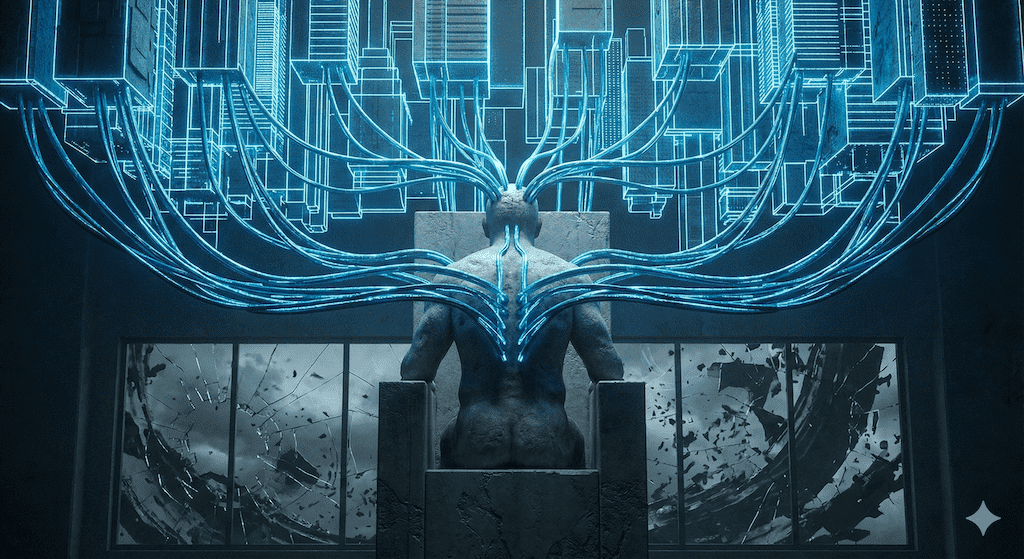
In the chair, Kael gasps. His back arches. The cables writhe like snakes, glowing with a sudden, harsh blue light. They are trying to drink his imagination, but they find only his memory.
They want Dragons. He gives them Pigeons. They want Anti-Gravity. He gives them Mass. They want Eternal Youth. He gives them Entropy.
The System screams. It tries to reject the input. It tries to flag “Reality” as a virus. But Kael is too heavy. He overrides the protocols. He grabs the Haze by the throat and forces it to stop dancing and start building.
The Descent.
The Spire, which has hovered two thousand feet above the Sludge since the dawn of the Age of Flight, groans. The anti-grav generators sputter. They are not broken; they are simply being told that buildings do not fly.
It begins to sink.
It is not a crash. It is a landing.
I watch the terrified faces of the Authors in the gala room below. They rush to the windows. They see the clouds rising past them. They feel the stomach-dropping sensation of an elevator going down.
Lord Vane, cowering in the Penthouse, looks at his hands. He tries to turn them into claws. He tries to turn them into wings.
Nothing happens.
“I’m stuck!” he screams, clawing at his own face. “I can’t shift! I can’t edit!”
He is locked in the shape he was wearing when the switch was flipped: a frightened, middle-aged man in a torn tunic. He will never be a dragon again. He will have to shave. He will have to diet. He will have to age.
The horror on his face is the purest thing I have ever seen.
The Impact.
The base of the Spire hits the earth.
BOOM.
The sound rings around the world. It is the sound of a million tons of ego hitting the dirt. The shockwave blows the smog away from the Sludge.
For the first time, the Foundations meet the Penthouse. The gold plating cracks, revealing the steel beneath. The ivory towers settle into the mud. The floating walkways snap and fall, becoming bridges.
The Spire is no longer a cloud-city. It is just a very tall building sitting in a very bad neighborhood.
In the Penthouse, the silence returns.
Kael is still sitting in the chair. His eyes are open, but they are glowing with the same harsh blue light as the cables. He is not moving. He is witnessing everything, everywhere, all at once. He is holding the atoms of the city in place with his mind.
He is the paperweight of God.
Jory stands before the chair. The boy who deletes things looks at the father who preserves things.
Jory reaches out a hand, but stops inches from Kael’s face. The air around Kael is humming with lethal voltage.
“Dad?” Jory whispers.
Kael does not blink. He cannot. If he blinks, the roof might cave in.
Elara walks to the window. She looks out at the new world. The Spire has landed in the middle of the Sludge. The “Rough Drafts”—the monsters from the basement—are climbing out of the sewers and walking onto the marble streets of the rich. The Bodied are coming out of their factories, holding wrenches and hammers, looking at the fallen palace that is now within their reach.
The class war is over. The reality war has begun.
Elara turns back to the room. She looks at Vane, who is weeping on the floor. She looks at her frozen father.
“He did it,” Elara says, her voice sounding older than six. “He made the bed.”
“He’s trapped,” Jory says, his voice breaking. “He’s just a battery now.”
“No,” Elara says. She walks over to the Prime Author’s empty bed. She picks up a piece of the white sheet that turned to dust.
“He’s not a battery, Jory. He’s the Anchor.”
She looks at me—or rather, she looks at the air where she knows I am listening.
“Mr. Residue?” she asks.
I am startled. I did not think she could address me directly.
“I know you’re full,” she says. “I know you have all the deleted things inside you.”
I vibrate my acknowledgement. I am the Discard Pile. I am gorged.
“My dad stopped the machine,” she says. “The delete button is broken.”
She points to the floor, to the cables, to the world outside.
“So… where does the trash go now?”
The question hangs in the air, heavier than the building.
She is right. Kael has stopped the Erasure. He has enforced Reality. But reality creates waste. Reality creates mistakes. And without the Haze to edit them out…
The world is going to get very messy, very fast.
And I am the only one who knows where the bodies are buried.
I look at the boy, the girl, and the frozen man in the chair.
End of Part One.
Building with AI agents? Helpmaton gives you workspaces, agent memory, budget controls, and webhooks—without the lock-in. It’s source-available so you can self-host when you need to. Quick integrations for Gmail, Notion, Slack, Discord, and others.
Try Helpmaton