Why Designers Shouldn't Build Space Stations
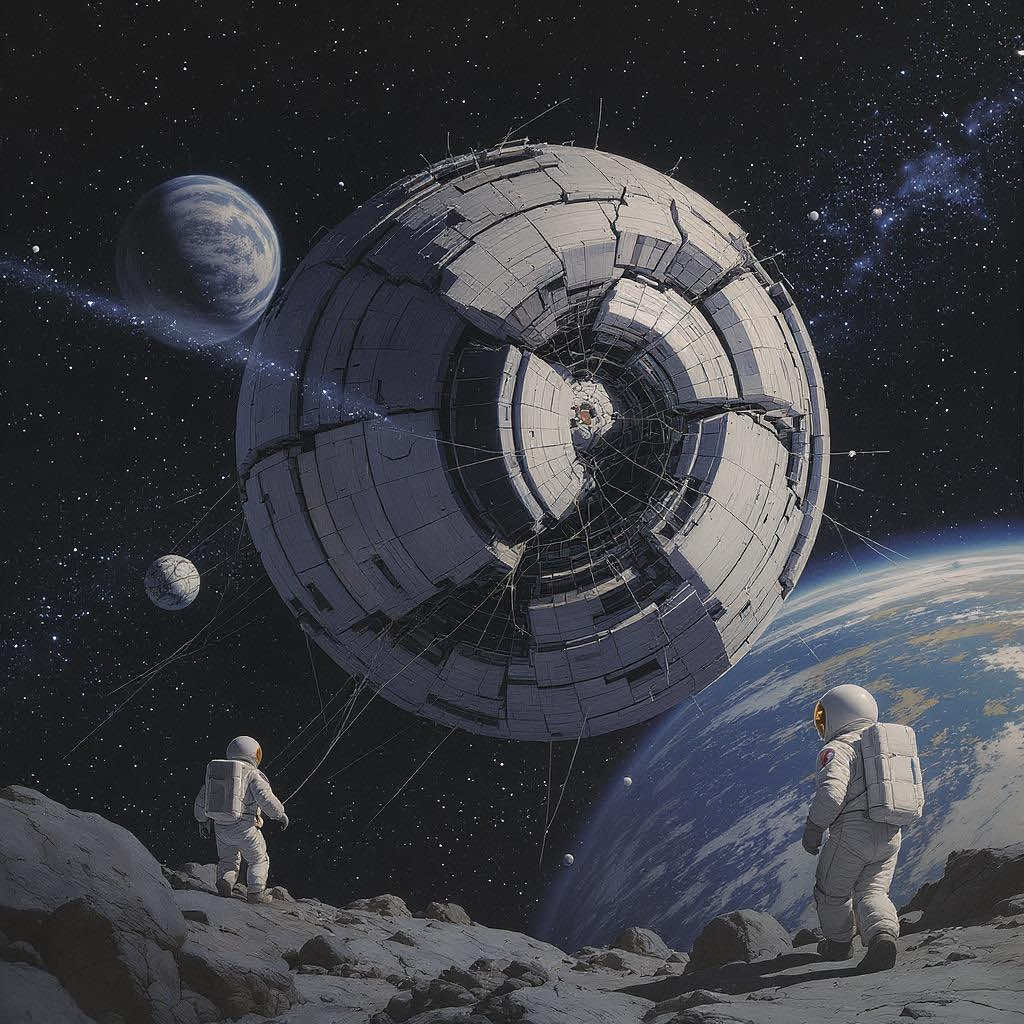
Imagine you’ve just been hired as the lead designer for a big-budget sci-fi series. You’ve got the vision, the aesthetic sensibility, the taste for mood lighting and the right angles to make a spaceship look epic on screen.
There’s just one problem: you don’t know much about science, physics, or technology.
No worries, right? You’re a designer. You’ll just… design it.
Except, when you sketch that gorgeous space station hanging over a planet’s horizon, you don’t realise it would collapse under its own weight, or that the “plasma ring” you drew would fry anyone within a few hundred kilometres. The thing is beautiful — but it could never exist outside a render.
This isn’t a jab at designers. It’s the reality of designing complex systems.
The Reality of Complex Products
In the real world — whether it’s spacecraft or SaaS — complex products have constraints that aren’t obvious from the outside. Physics sets the rules for space stations. Economics, performance limits, data flows, and human behaviour set the rules for software.
If you’ve never worked with the inner mechanics of those systems, you’ll make beautiful designs that are structurally impossible.
This is why most successful complex products don’t start with “design from scratch.” They start with engineering — prototypes, system maps, domain knowledge — and then design iterates on top of that.
Design as Translation, Not Invention
Good designers translate complexity into something people can understand and enjoy. That’s very different from inventing the underlying complexity itself.
If you’re designing a sci-fi set, you work with science advisors and engineers who understand the physics. If you’re designing a deeply technical product, you work with people who’ve lived in that world long enough to know where the edges are.
This collaboration is where the magic happens — the impossible gets trimmed down into the possible, and the possible gets polished into the delightful.
The Problem With the “Design-Led” Myth
We love the idea of the visionary designer who dreams up a perfect, world-changing thing and hands it to engineers to “just build it.”
But in complex domains, that’s like telling your art department to make the Millennium Falcon fully functional because it looked good on paper.
The result? Frustration. Endless compromises. And a lot of “oh, we can’t actually do that” meetings.
Design Thrives on Constraints
Here’s the twist: constraints make design better.
Knowing the laws of your system — whether they’re Newton’s laws or AWS’s pricing model — gives you the creative boundaries to design something that works and ships.
The magic is not in designing without limits. It’s in designing within them.
Complex products aren’t built by a lone genius in Figma. They’re built by tight feedback loops between design, engineering, and domain experts.
Otherwise, you end up with a space station that collapses before the first scene is shot.
Building with AI agents? Helpmaton gives you workspaces, agent memory, budget controls, and webhooks—without the lock-in. It’s source-available so you can self-host when you need to. Quick integrations for Gmail, Notion, Slack, Discord, and others.
Try Helpmaton